Market snapshot
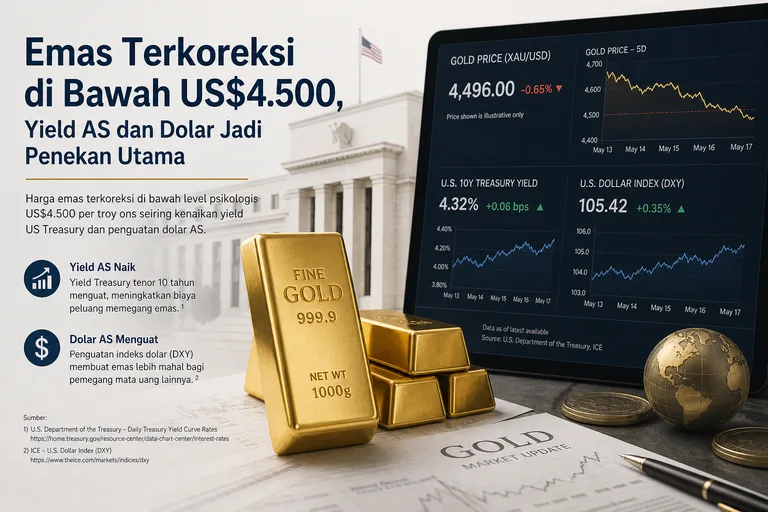
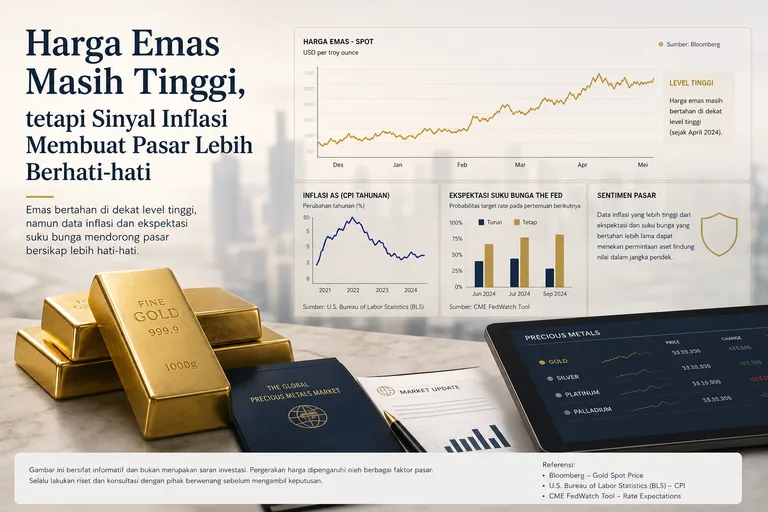
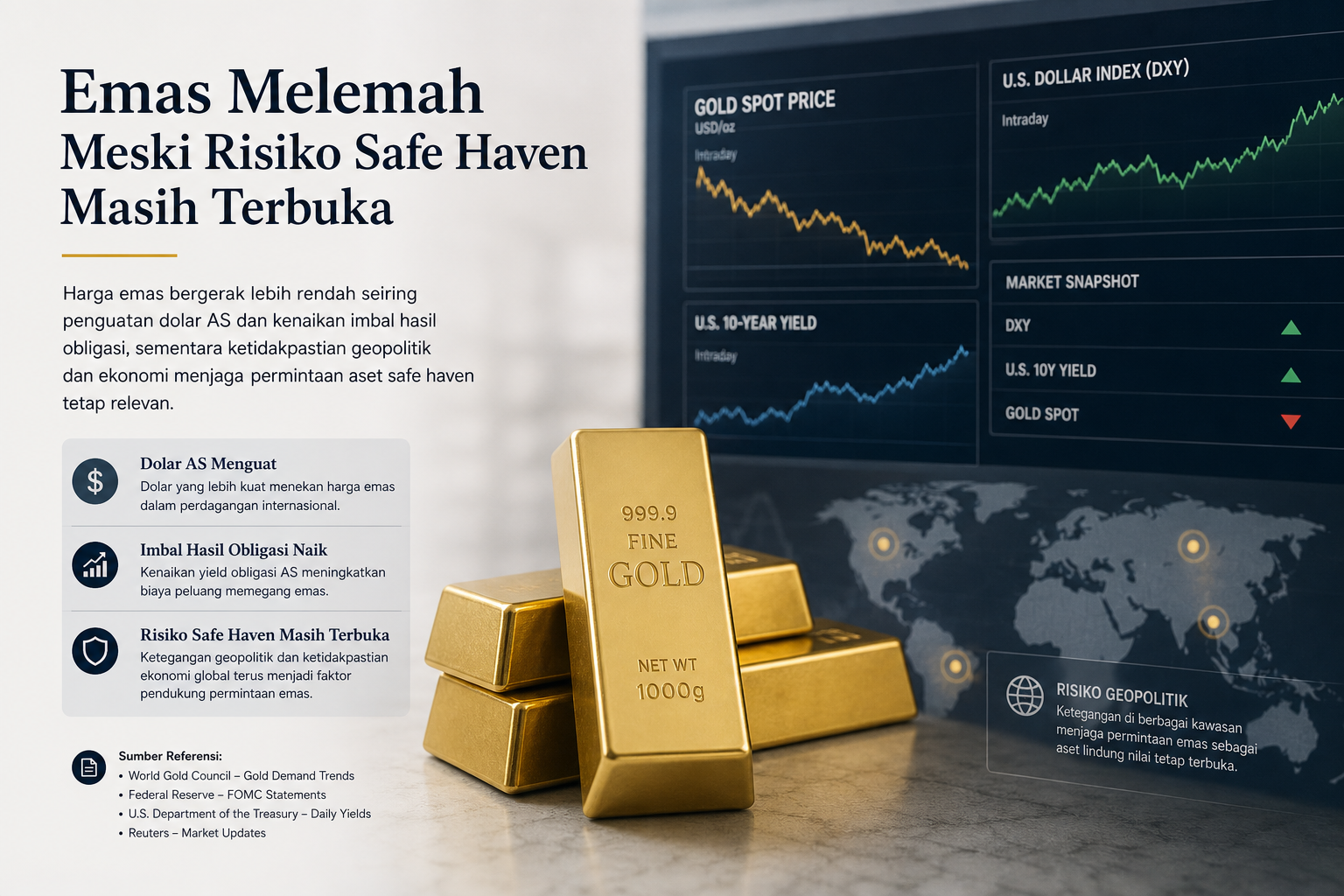
According to Kitco, spot gold fell 1.85% on May 19, 2026 to around $4,481.10 per ounce. Silver posted a deeper decline, down 5.15% to about $73.56 per ounce. The move came as precious metals markets continued to balance two opposing forces: demand for safe-haven assets amid geopolitical risk, and the opportunity-cost burden created by a stronger U.S. dollar and firmer Treasury yields.
The message from that session was clear: safe-haven interest had not disappeared, but it was not strong enough to offset near-term macro pressure.
Price context and spread
Gold trading below $4,500 per ounce stood out as the main headline level in the Kitco summary. Silver moved more sharply, which matters because the metal often reacts more aggressively than gold when risk sentiment shifts. The percentage gap between the two declines suggests that traders were more willing to reduce exposure in silver than in gold during the session.
That does not change the longer-term role of either metal. It does, however, show that in this market phase, bullion prices are still being shaped by macro inputs rather than by geopolitics alone.
Main movers or strongest signal
The strongest direct pressure came from the U.S. dollar. FRED data from the Federal Reserve Bank of St. Louis showed the Nominal Broad U.S. Dollar Index at 119.2825 on May 15, 2026, up from 118.0562 on May 11. Because gold and silver are priced globally in dollars, a firmer greenback tends to make bullion more expensive for non-U.S. buyers.
Treasury yields also kept the cost of holding non-yielding assets elevated. FRED showed the 10-year U.S. Treasury yield at 4.38% on May 8, 2026, down from 4.45% on May 4, but still high enough to compete with bullion for capital.
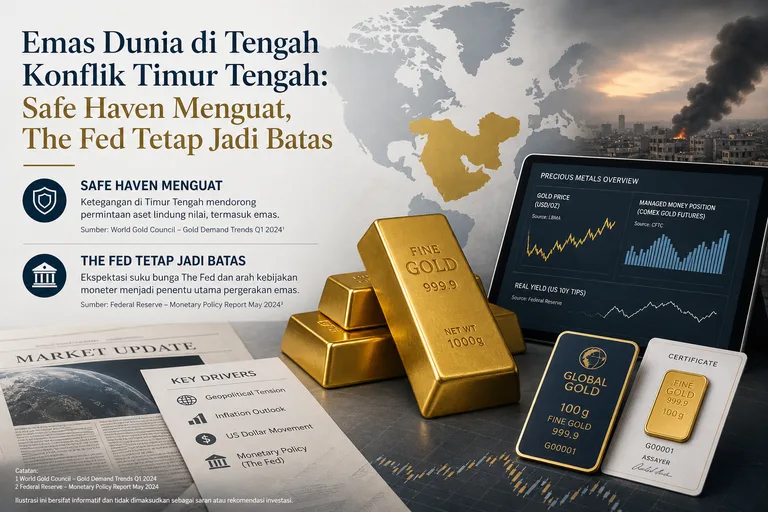
Kitco also flagged higher Treasury yields, a stronger dollar, and oil-linked inflation concerns as factors weighing on bullion, even as tensions around the Strait of Hormuz kept investors attentive to hedging demand.
Silver’s sharper drop also fits the broader picture. Beyond its precious-metal role, silver has an industrial dimension, and that can add to volatility when markets reassess growth and rate expectations. Trading Economics noted that silver had already weakened to around $85.6 per ounce on May 14, 2026, amid stronger-than-expected U.S. import and export price data and a market view that expectations for Fed rate cuts had been pared back.
Editorial takeaway
For gold, the main takeaway is not that the safe-haven case has disappeared. It is that, on this day, the market gave more weight to dollar strength and Treasury yields than to geopolitical support. That is an important distinction for readers following bullion: the safe-haven narrative can remain intact even while prices soften.
Silver’s larger percentage decline reinforces that precious metals do not move in lockstep. Its combination of safe-haven and industrial characteristics makes it more sensitive to shifts in rates, inflation expectations, and growth signals.
Reference reminder
This article is based on Kitco’s May 19, 2026 bullion update for spot gold and silver prices, FRED and the Federal Reserve Bank of St. Louis for the dollar index and Treasury yield context, LBMA for London vault stock and the 2026 precious metals survey, and Trading Economics for silver and rate-expectation context. It is for market information only and is not personal investment advice.
References
- Kitco (2026). Spot gold turun di bawah US$4.500 saat yield Treasury dan dolar AS menguat. Bearish jangka pendek untuk emas dan perak karena dolar dan yield yang lebih tinggi menaikkan opportunity cost memegang bullion, meski risiko geopolitik masih memberi bantalan safe-haven.
- FRED, Federal Reserve Bank of St. Louis (2026). Indeks dolar AS broad naik ke 119,2825 per 15 Mei 2026. Cenderung bearish untuk bullion dalam jangka pendek karena penguatan USD mengurangi daya tarik emas bagi investor global dan dapat menahan reli safe-haven.
- FRED, Federal Reserve Bank of St. Louis (2026). Yield Treasury AS 10 tahun bertahan tinggi di kisaran 4,38% pada awal Mei. Netral-ke-bearish untuk emas jika yield riil ikut bertahan tinggi; namun penurunan yield dari 4,45% ke 4,38% dapat memberi sedikit ruang stabilisasi harga.
- LBMA (2026). LBMA: London vault holdings emas naik 1,4% m/m pada akhir Maret 2026. Bullish secara struktural untuk kredibilitas dan likuiditas pasar fisik London; kenaikan stok mendukung narasi bahwa pasar OTC masih memiliki basis fisik besar untuk menopang perdagangan bullion.
- LBMA (2026). LBMA: Survei 2026 memperkirakan volatilitas tinggi pada emas, perak, platinum, dan palladium. Bullish namun volatil: survei mendukung angle bahwa logam mulia masih memiliki upside besar, tetapi pembaca perlu diberi konteks risiko koreksi dan rentang harga yang lebar.
- Trading Economics (2026). Trading Economics: Perak turun saat pasar menimbang pembicaraan AS-China dan data inflasi. Mixed untuk perak: tekanan jangka pendek datang dari ekspektasi suku bunga yang lebih tinggi, tetapi permintaan industri dari elektronik dan panel surya tetap menjadi penopang fundamental.