According to AP News, U.S. consumer inflation rose 3.8% year on year in April, while gasoline prices increased 5.4% month on month after the impact of the Iran war. That data is important for the gold market because the Middle East conflict is being read not only as a geopolitical risk, but also as a source of energy pressure that can spill into global inflation.
Under normal conditions, geopolitical escalation often lifts demand for safe assets such as gold. But the current backdrop is more layered. Higher oil prices linked to supply risks can strengthen hedging demand, while at the same time prompting markets to reconsider whether U.S. interest rates may need to stay elevated for longer.
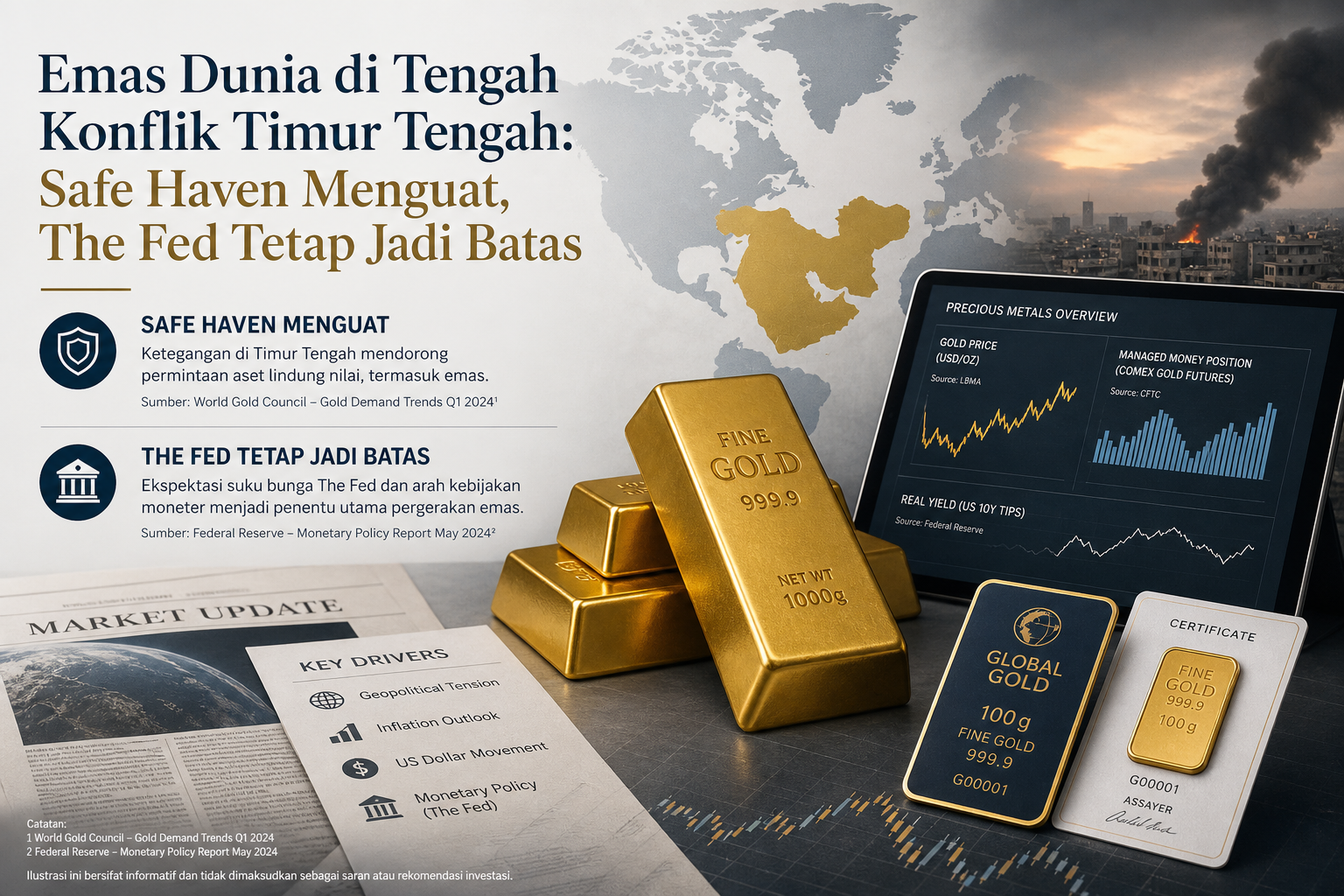
That is why global gold should not be read only through the lens of conflict headlines. Markets are also watching oil prices, inflation data, the U.S. dollar, bond yields, and expectations for Federal Reserve policy. Together, these factors leave gold caught between two currents: support from safe-haven flows and pressure from real rates and a firmer dollar.
Trading Economics reported gold at around US$4,690 per ounce on May 12, 2026, with pressure appearing as Middle East uncertainty and a prolonged closure of the Strait of Hormuz pushed oil higher, kept inflation risks alive, and strengthened the U.S. dollar. The signal suggests that conflict escalation does not automatically translate into higher gold prices.
For bullion readers, the key point is that the relationship between oil and gold is not always one-directional. When oil rises on supply risk, gold can gain support as a safe asset. But if higher oil makes inflation harder to bring down, markets may reduce expectations for Federal Reserve rate cuts, leaving the U.S. dollar and yields as potential headwinds for gold.
Oil and inflation remain the main transmission channel
AP News also reported that disruptions to Middle East energy supply pushed WTI up 8.6% to around US$72.79 per barrel in early trading after U.S.-Israel strikes on Iran and Iran’s retaliation. Market attention has centered on the risk to Gulf oil exports and the Strait of Hormuz, both of which are highly sensitive points in the global energy chain.
That kind of oil move matters for precious metals because energy is a broad cost input. Fuel prices can affect transportation, production, and corporate expenses. If that pressure persists, inflation can become harder to contain, especially in a major economy such as the United States.
AP News later reported that U.S. producer inflation in April rose 6% year on year and 1.4% month on month, the highest annual rate in more than three years, as the Iran war increased energy costs and added pressure on businesses. The PPI data reinforced the view that the conflict’s impact did not stop at oil markets, but also fed into production costs.
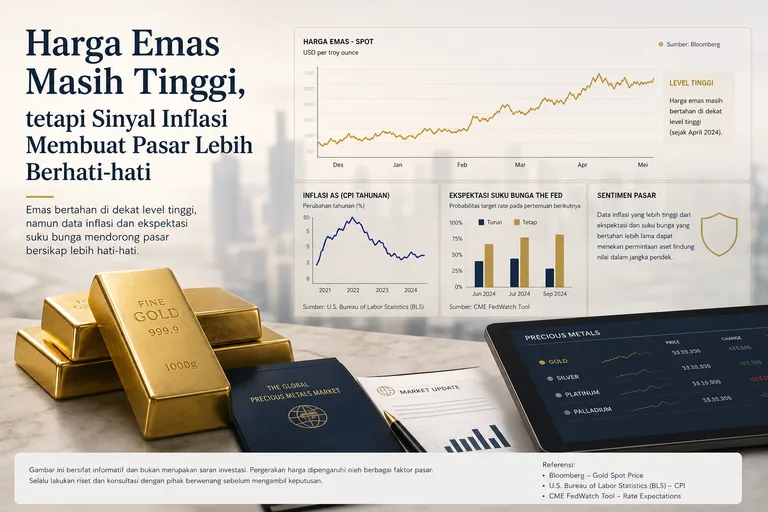
For gold, higher inflation data carries two relevant interpretations. On one hand, gold is often viewed as a store of value when inflation rises. On the other hand, higher inflation can make central banks, especially the Federal Reserve, more cautious about easing policy.
When markets believe the Fed will keep rates higher for longer, non-yielding assets such as gold can face pressure. A stronger U.S. dollar can also make gold more expensive for buyers using other currencies. For that reason, the geopolitical impact on gold at this stage is not isolated; it passes through energy, inflation, and monetary policy.
CME Group said the Middle East war raises the inflation outlook, disrupts energy supply chains, increases military spending, and deepens geopolitical uncertainty. However, CME also noted that gold, silver, platinum, and palladium prices have fallen sharply since the conflict began. That point matters because it shows the safe-haven narrative can be outweighed by interest rates, the U.S. dollar, and market positioning.
In other words, gold still has a defensive role in uncertain periods, but day-to-day price action can differ from the initial instinct. The market is not only asking whether geopolitical risk is rising, but also whether that risk will force inflation to remain elevated. The answer to that second question is what ultimately shapes expectations for the Fed.
Local retail price context and spread
As local retail price context from official brand websites, data as of May 17, 2026 showed several bullion products holding steady versus prior selling prices. On the Antam website, the Antam Gift Series 8 gram was listed with a buy price of Rp20,608,000 and a sell price of Rp23,006,800, giving a spread of Rp2,398,800. Its selling price was unchanged from the previously available data.
On the Hartadinata website, the Hartadinata Gift Series 100 gram was listed with a buy price of Rp252,100,000 and a sell price of Rp262,000,000. The spread was Rp9,900,000, and the selling price was also unchanged from prior data. These figures help show that domestic retail pricing has its own structure, including product size, brand, and transaction spread.
Meanwhile, Silvergram listed the Silvergram Normal 250 gram with a buy price of Rp14,395,000 and a sell price of Rp16,359,000. The spread was Rp1,964,000, and the selling price was unchanged from previous data. Because this product is silver, the context is not identical to gold, but it remains a useful comparison for retail precious metals with their own spread dynamics.
It is worth noting that domestic retail prices do not always move in lockstep with global gold prices in real time. Product size, format, brand, manufacturing costs, distribution, and each provider’s pricing policy all play a role. For that reason, retail data should be read as local pricing context, not as the sole signal for global gold direction.
In this article, the main focus remains the global factors shaping gold: the Middle East conflict, oil prices, U.S. inflation, the U.S. dollar, and expectations around the Fed. Retail data helps readers see how public prices were recorded on a specific date, but the international market direction still depends on a broader mix of macro drivers.
Strongest signal: the market is refocusing on the Fed
From the available data, the strongest signal right now is that the market has returned to watching the Fed’s policy path. The Middle East conflict has indeed increased safe-haven demand and oil supply risk. But the follow-through effect through energy-driven inflation is making markets more cautious about the likelihood of rate cuts.
AP News said U.S. CPI rose 3.8% year on year in April, while PPI rose 6% year on year. Those two readings put pressure on the narrative that inflation is already tame enough to support policy easing. When both consumer and producer inflation show pressure, markets tend to become more sensitive to the next comments and data releases from the central bank.
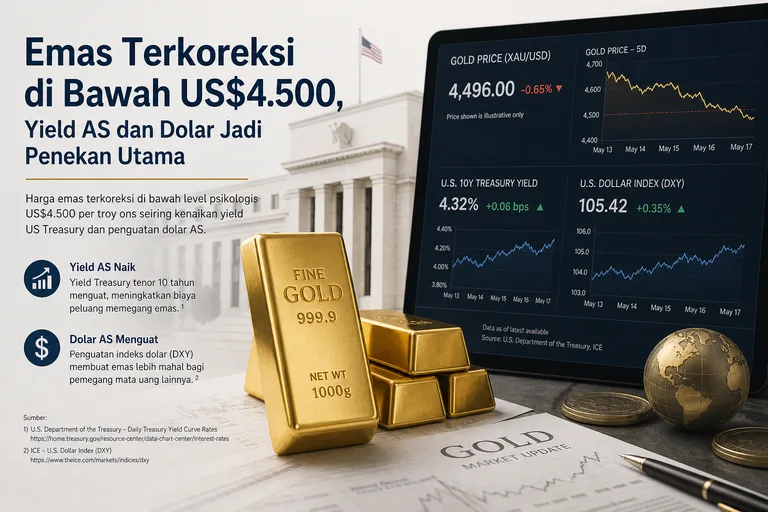
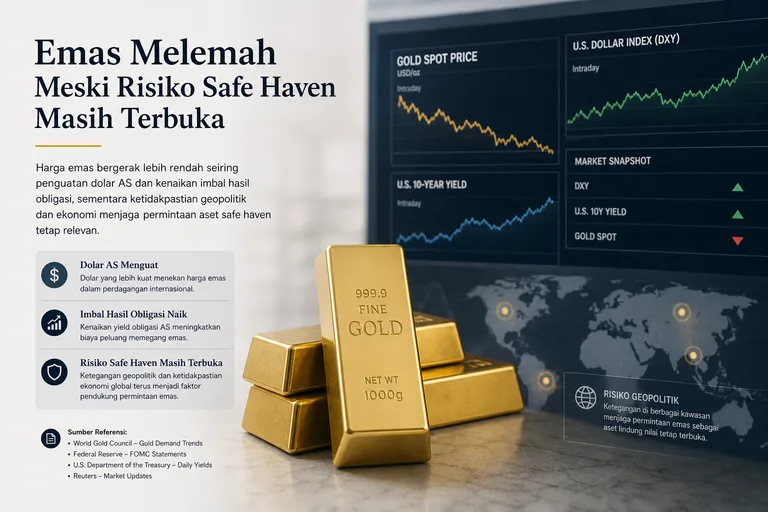
Trading Economics also noted that a stronger U.S. dollar was one of the factors weighing on gold when inflation risks from oil increased. That fits the global market framework: when the dollar strengthens, gold priced in dollars can face a hurdle, especially if investors still see dollar-based yields as attractive.
The LBMA’s 2026 analyst survey identified geopolitics, U.S. monetary policy, safe-haven demand, and central bank reserve diversification as key factors for gold prices. LBMA also noted an average analyst projection of US$4,213 per ounce for 2026, with a wide range. That wide range shows the market is still facing substantial uncertainty, not only from geopolitics but also from monetary policy and institutional demand flows.
For the bullion market, this means the Middle East conflict is an important catalyst, but not the only driver. If conflict risk rises without reinforcing expectations for higher rates, gold may receive stronger safe-haven support. Conversely, if conflict pushes oil and inflation sharply higher, pressure from the dollar and yields may limit gold’s upside.
The editorial takeaway is straightforward: gold is moving through a risk map that is not simple. Safe-haven demand remains a major reason many market participants watch gold during rising geopolitical tension. But in the current phase, the market is also assessing whether the energy shock will make the Fed keep a tight stance for longer.
For retail readers, the healthier approach is to read the data in layers. Global gold can react to conflict headlines, but that reaction should be weighed against inflation data, the direction of the U.S. dollar, and interest-rate expectations. Local retail prices should also be viewed alongside spreads and the recording date, not only the selling price on a single day.
This article is not intended as a trading recommendation. The information used comes from AP News, Trading Economics, CME Group, LBMA, and public price data from the official brand websites cited above. In a market this sensitive to geopolitics and monetary policy, source references and data dates are essential to keeping the reading of the market calm, factual, and easy to review.
References
- AP News (2026). Inflasi konsumen AS naik ke 3,8% karena perang Iran mendorong harga bensin. Inflasi energi biasanya mendukung emas sebagai lindung nilai, tetapi jika inflasi membuat The Fed menunda pemangkasan suku bunga, USD dan yield dapat mengimbangi dukungan safe haven untuk emas.
- Trading Economics (2026). Emas tertekan karena ketegangan Timur Tengah mengangkat minyak dan ekspektasi pemangkasan suku bunga melemah. Sinyal ini penting karena menunjukkan bahwa eskalasi geopolitik tidak selalu bullish untuk emas jika efek minyak-inflasi membuat dolar AS menguat dan prospek suku bunga menjadi lebih hawkish.
- CME Group (2026). CME: konflik Timur Tengah memicu inflasi dan ketidakpastian, tetapi logam mulia melemah sejak konflik pecah. Memberi konteks editorial bahwa emas bisa gagal reli meski risiko geopolitik naik, ketika pasar lebih fokus pada inflasi energi, peluang suku bunga tinggi lebih lama, dan penguatan dolar.
- AP News (2026). Inflasi produsen AS melonjak 6% karena perang Iran menaikkan biaya energi. PPI yang tinggi memperkuat risiko inflasi berlanjut ke harga konsumen, sehingga pasar emas perlu menimbang dua efek berlawanan: dukungan dari hedge inflasi versus tekanan dari ekspektasi suku bunga lebih tinggi.
- AP News (2026). Gangguan pasokan energi Timur Tengah sempat mendorong lonjakan tajam harga minyak. Kenaikan minyak akibat risiko pasokan memperkuat permintaan safe haven emas, tetapi juga dapat menambah tekanan inflasi yang mendorong pasar mengurangi taruhan pemangkasan suku bunga.
- LBMA (2026). LBMA 2026: geopolitik, kebijakan moneter AS, dan diversifikasi bank sentral tetap menjadi faktor utama emas. Sinyal ini mendukung angle struktural: konflik Timur Tengah adalah katalis jangka pendek, tetapi arah emas dunia tetap sangat dipengaruhi oleh Fed, USD, permintaan bank sentral, dan persepsi risiko sistemik.