1. Lead market snapshot
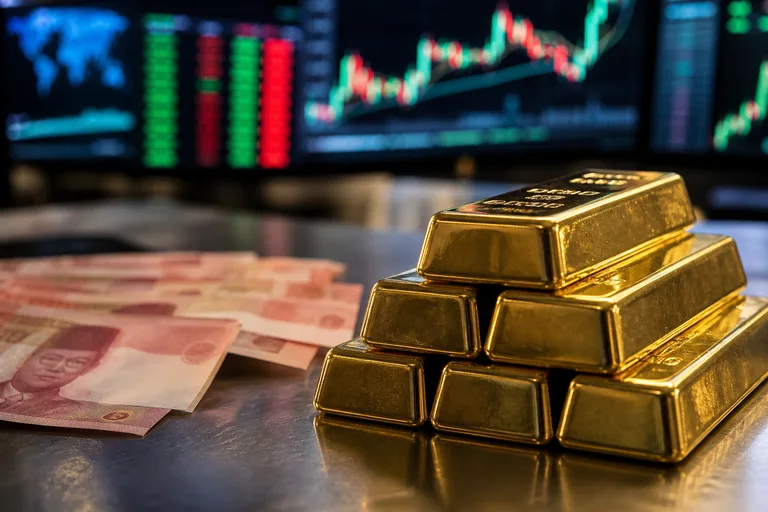
Based on Antam’s official website, the Normal 100-gram Antam gold selling price on May 28, 2026 was Rp269,760,000, down Rp3,100,000 from the previous Rp272,860,000. At the same time, Hartadinata’s official website showed the Hartadinata Gift Series 100 grams unchanged at Rp264,500,000 on the same date.
The split move suggests that retail physical gold does not always move in one direction, even when the global market is reading the same broad sentiment.
2. Price context and spread
The pullback in some gold references came while the Middle East remained tense. In theory, geopolitical conflict is often associated with stronger demand for safe-haven assets such as gold. In practice, the market is not reacting to that factor alone.
Gold still serves as a hedge asset, but in the short term investors are also weighing other forces that may matter more.
3. Main movers or strongest signal
The key signal being watched is the direction of Federal Reserve interest rates. In an Investing.com analysis published on May 26, 2026, the Middle East conflict was said not to lift gold automatically because markets were increasingly focused on the effects of energy inflation, the possibility of higher interest rates, and the rising opportunity cost of holding gold.
Because gold does not pay interest, higher bond yields or expectations of higher rates can lead some investors to trim short-term exposure.
Geopolitical risk is still present, but the market is not treating conflict as a simple buy signal for gold. The same risk can also be interpreted as a trigger for higher energy prices. If energy rises and inflation stays elevated, central banks may be pushed to keep policy tight for longer. That path can pressure gold even when the headlines look supportive for safe-haven demand.
Why conflict does not always lift gold immediately
Gold usually gains support when uncertainty rises because it is seen as an asset that does not depend on another party’s obligation. But the market does not stop at one variable. When Middle East tensions are linked to energy prices, investors also estimate the impact on inflation, bond yields, and the U.S. dollar. Together, these factors can change the daily direction of gold.
Investing.com also reported on May 17, 2026 that gold had fallen to its lowest level since March 30 before a modest rebound. That report said the move was shaped by a weaker dollar, easing yields, and the stalemate in the U.S.-Iran conflict. The important point was that high yields and expectations of higher global rates continued to weigh on gold, even though geopolitical tension was offering safe-haven support.
This is why gold can move opposite to a simple market assumption. If investors read war risk mainly through the lens of energy inflation, the next question becomes how central banks will respond. If the expected response is higher rates or a slower pace of cuts, gold can lose some of its short-term appeal.
The U.S. dollar also matters. Global gold is generally priced in dollars, so a stronger dollar can make gold more expensive for buyers using other currencies. A weaker dollar can give gold some breathing room. But this effect often moves together with yields and rate expectations, so the result can change from day to day.
The Fed signal is being read as firmer by the market
The FOMC statement on April 29, 2026 remains a key reference. The Federal Reserve said the U.S. economy was still solid, inflation remained elevated partly because of higher global energy prices, and developments in the Middle East added uncertainty to the outlook. At the same time, the Fed kept the federal funds target range at 3.50% to 3.75%.
For the gold market, that language matters because it suggests the central bank is still not comfortable with inflation. If inflation is still seen as high, room for policy easing becomes more limited. Gold can benefit from uncertainty, but it can also come under pressure when that uncertainty keeps rate expectations elevated.
The April 2026 FOMC minutes, released on May 20, 2026, reinforced that reading. The minutes noted higher short-term inflation expectations, rising Treasury yields, and options markets implying about a 30% probability of a rate hike in the first quarter of 2027. Survey respondents also expected rate cuts to arrive more slowly than in the previous survey.
This helps explain why the market is waiting on the central bank. When investors think rates may stay higher for longer, gold faces pressure from rising opportunity cost. Assets that pay coupons or interest become relatively more attractive than gold, especially for investors focused on short-term yield.
Inflation data also supports that view. The U.S. Bureau of Labor Statistics reported that April 2026 CPI-U rose 0.6% month on month and 3.8% year on year. The energy component increased 3.8% in the month and accounted for more than 40% of the monthly rise in the headline index. That supports the argument that energy prices are a key channel for reading geopolitical conflict.
For gold, high inflation cuts both ways. On one hand, gold is often seen as a hedge against declining purchasing power. On the other hand, if inflation forces the Fed to keep rates high, gold can face pressure through yields and the dollar. In the current phase, the market appears more sensitive to the second effect.
4. Editorial takeaway
In the domestic physical market, the spread between selling and buyback prices should also be read in context. According to Antam’s official data for the 100-gram size, the selling price of Rp269,760,000 and the buyback price of Rp255,700,000 imply a spread of Rp14,060,000. That spread is not a standalone signal for market direction; it is part of the retail pricing structure that physical gold buyers need to understand.
For Hartadinata Gift Series 100 grams, the selling price was Rp264,500,000 and the buyback price was Rp254,800,000, a spread of Rp9,700,000. The selling price was unchanged from the previous level in the available data. Differences in spread between products can reflect product characteristics, each issuer’s pricing policy, and the buy-sell structure used on official channels.
That is why reading physical gold prices requires more than checking whether global prices are up or down. Retail pricing can reflect raw material costs, fabrication, design, availability, and buyback policy. For an editorial market update, these figures are better treated as context rather than as an investment conclusion.
What matters more today is the macro signal. With the Fed, energy inflation, bond yields, and the U.S. dollar in focus, daily gold moves can look less aligned with geopolitical headlines. That does not mean gold has lost its role as a safe haven. It means that role is currently competing with other powerful forces.
Structural demand is still a cushion
Even with short-term pressure from rates, the medium-term picture is not entirely negative. The World Gold Council reported that total gold demand in Q1 2026, including OTC, rose 2% year on year to 1,231 tonnes. Bar and coin demand increased 42% year on year to 474 tonnes, while central banks bought a net 244 tonnes.
That data shows that structural support for gold still exists. Central bank buying and bar-and-coin demand can help limit downside, especially when geopolitical uncertainty and inflation remain major themes. Still, structural support does not mean prices will rise continuously each day. In practice, macro factors such as yields and rate expectations can dominate short-term moves.
The result is a more balanced reading of the market. Middle East tensions can lift demand for safe assets, but if the market interprets the conflict mainly as a channel for higher energy inflation, the reaction to gold can become mixed. Safe-haven demand offers support, while rate expectations create pressure. The lower price on some retail references today reflects that tug-of-war.
The editorial takeaway is simple: gold has not lost its status as a hedge asset, but at this stage the market is giving more weight to the Fed’s stance. As long as energy inflation, bond yields, and the U.S. dollar remain central, gold may continue to react more to macro data than to geopolitics alone. Readers should separate the short-term narrative from the medium-term structural backdrop.
This article is not investment advice. The physical price figures refer to Antam and Hartadinata official websites for May 28, 2026, while the macro context refers to Investing.com, the Federal Reserve, the U.S. Bureau of Labor Statistics, and the World Gold Council. For financial decisions, use the latest official data and consider your own risk profile.
References
- Investing.com (2026). Gold loses safe-haven edge as geopolitics fuel inflation fears. Bearish jangka pendek karena inflasi energi dan ekspektasi suku bunga lebih tinggi mengurangi daya tarik emas sebagai aset non-yielding, meski demand bank sentral membatasi downside.
- Investing.com (2026). Gold prices volatile as dollar slips, yields ease, and U.S.-Iran impasse persists. Mixed-to-bearish: ketegangan geopolitik menopang safe-haven bid, tetapi yield tinggi dan potensi dolar kuat menekan harga emas.
- Federal Reserve (2026). Fed keeps rates unchanged and flags elevated inflation from global energy prices. Bearish jangka pendek jika pasar membaca Fed lebih hawkish; suku bunga riil/yield yang bertahan tinggi meningkatkan opportunity cost memegang emas.
- Federal Reserve (2026). FOMC minutes show rate-cut timing pushed later and rate-hike probability appeared in options pricing. Bearish untuk bullion karena repricing jalur suku bunga dan kenaikan yield nominal biasanya menekan emas, terutama saat safe-haven buying tidak cukup kuat.
- U.S. Bureau of Labor Statistics (2026). U.S. CPI rose 0.6% m/m and 3.8% y/y in April 2026, driven partly by energy. Bearish-to-mixed: inflasi tinggi bisa mendukung emas sebagai hedge, tetapi bila inflasi memicu ekspektasi Fed lebih ketat dan yield naik, efek bersihnya dapat menekan harga emas.
- World Gold Council (2026). World Gold Council: Q1 2026 gold demand supported by bar-and-coin buying and central banks. Bullish sebagai bantalan struktural: demand bank sentral dan bar-koin dapat membatasi koreksi walau faktor makro seperti USD dan yield menekan harga harian.