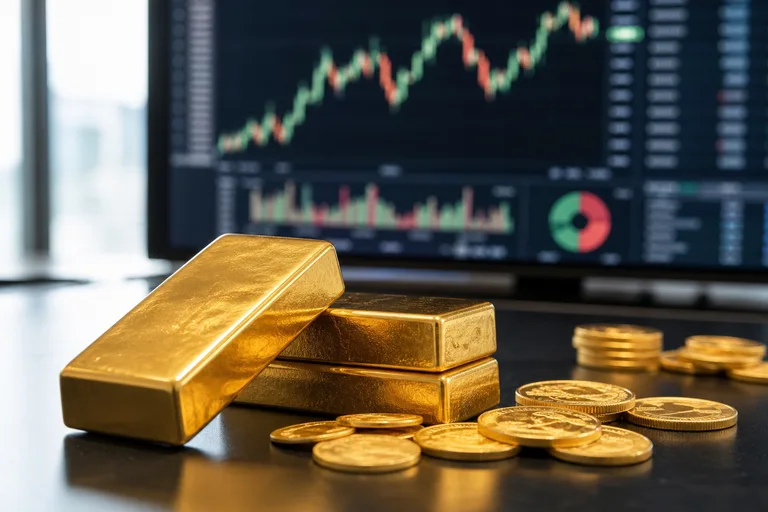
1. Lead market snapshot
Gold is still moving between two competing forces. On one side, safe-haven demand and reserve buying continue to support bullion. On the other, higher interest rates and firmer yields are limiting upside.
For the domestic market, Bank Indonesia is an important reference point this week. In its official release on 20 May 2026, the central bank raised the BI-Rate by 50 basis points to 5.25%, citing rupiah stabilization, global volatility linked to Middle East tensions, and a pre-emptive step to keep inflation within its 2.5% ± 1% target range for 2026 and 2027.
2. Price context and spread
This update does not include internal daily prices, retail quotes, buyback levels, or transaction spreads. For that reason, this article does not cite a specific gold price level, compare bid-ask gaps, or judge whether current trading levels are expensive or cheap.
That limitation matters for editorial accuracy. Without verified price data, the safer approach is to focus on the market drivers behind bullion moves rather than offering a transaction conclusion. Readers should refer to official price sources before using any figure as a market quote.
3. Main movers or strongest signal
For gold priced in rupiah, the BI-Rate decision matters because local bullion prices are influenced not only by global gold direction, but also by the exchange rate, inflation expectations, and the opportunity cost of holding a non-yielding asset when rates rise.
At the same time, gold still has support from the safe-haven theme. Geopolitical risk and inflation concerns have not fully faded, and that keeps some demand in place even as policy conditions stay tight.
The broader global backdrop remains mixed. On the U.S. side, the Bureau of Labor Statistics reported that CPI-U rose 0.6% month on month in April 2026 and 3.8% year on year, before seasonal adjustment. That keeps attention on sticky inflation, which may make the Federal Reserve cautious about easing too quickly.
The Federal Reserve’s minutes for its 28–29 April 2026 meeting show the federal funds target range was held at 3.50%–3.75%. Survey expectations in those minutes pointed to possible rate cuts in the third or fourth quarter of 2026, and then again in the first quarter of 2027. For gold, a longer period of elevated rates usually acts as a headwind because it can lift real yields and support the U.S. dollar.
Still, the relationship is not one-way. High inflation can reinforce the case for gold as a hedge, but the same inflation can also delay policy easing. That is one reason bullion often trades in a push-and-pull pattern when markets do not yet have clarity on inflation and central bank direction.
Structural demand also remains visible in the data from the World Gold Council. In its 3 June 2026 publication, the Council said central banks returned to net gold buying in April, purchasing 17 tonnes after a sizable net sale in March. Poland was the largest monthly buyer, while China extended its buying streak to 18 consecutive months.
Central-bank demand matters because it reflects longer-term reserve management rather than short-term speculation. It does not guarantee higher prices, but it remains a meaningful support factor for gold.
The same report said total gold demand in Q1 2026, including OTC activity, reached 1,231 tonnes, up 2% year on year. Bar and coin demand rose 42% year on year to 474 tonnes, with retail investors still attracted by momentum and safe-haven appeal.
Short-term pressure has also been visible. A Reuters report carried by Kitco said gold fell more than 2% on 15 May 2026 as higher U.S. Treasury yields and a stronger dollar reduced bullion’s appeal. At the same time, oil prices and Middle East tensions continued to keep inflation concerns in the background.
That combination captures the current setup well: gold is being pulled by two strong forces at once. Geopolitical and inflation risks support hedging demand, while bonds and the dollar can weigh on prices when the cost of holding gold rises.
4. Editorial takeaway
For Indonesia, the BI-Rate increase should be read primarily as a stability measure. Bank Indonesia explicitly linked the decision to rupiah stability and inflation control. In the local gold market, those two factors matter because retail bullion prices are often sensitive to both exchange-rate moves and global sentiment.
If the rupiah comes under pressure, gold priced in rupiah may move differently from global gold. If stabilization efforts reduce currency volatility, local prices may track international bullion more closely. However, without verified daily price data, this article cannot translate that relationship into a specific price or spread.
Buying behavior may also shift when rates rise. Some market participants may prefer interest-bearing assets more than gold. Others may still use bullion as a diversification tool, especially when inflation and geopolitical risk remain relevant. Both responses can coexist, so the market does not always move in a single direction.
In editorial terms, it is important to separate support factors from transaction conclusions. Stronger central-bank demand is supportive. U.S. inflation at 3.8% year on year keeps the hedge narrative alive, but also encourages caution from the Fed. Bank Indonesia’s higher policy rate is a domestic factor that can affect the exchange rate, demand, and opportunity cost.
These are useful market references, but they are not enough to support a buy, sell, or hold recommendation. Any transaction decision still requires up-to-date pricing, personal financial objectives, risk tolerance, and official references from the relevant price provider or institution.
5. Reference reminder
This article is based on releases and reporting from Bank Indonesia, the World Gold Council, the U.S. Bureau of Labor Statistics, the Federal Reserve, and a Reuters report carried by Kitco.
The key data points cited here are limited to what is available from those sources: the BI-Rate at 5.25%, U.S. CPI at 3.8% year on year in April 2026, the 3.50%–3.75% federal funds target range, 17 tonnes of net central-bank gold buying in April, and 474 tonnes of bar and coin demand in Q1 2026.
The editorial conclusion is straightforward: gold still has support from safe-haven demand, inflation, and official-sector buying, but pressure from interest rates, bond yields, and the stronger dollar has not disappeared. As long as inflation data and central-bank policy remain in focus, bullion should be read with source discipline and without overstating the signals available.
References
- Bank Indonesia (2026). Bank Indonesia raises BI-Rate by 50 bps to 5.25% to defend stability. Higher domestic rates and rupiah-stability policy can affect Indonesian gold demand and IDR-denominated bullion prices; the geopolitical-stability framing supports safe-haven editorial angles.
- World Gold Council (2026). World Gold Council: central banks resume net gold buying in April. Renewed official-sector buying is structurally supportive for gold and strengthens narratives around reserve diversification and safe-haven accumulation.
- U.S. Bureau of Labor Statistics (2026). U.S. CPI rises 3.8% year-on-year in April 2026; May CPI due 10 June. Sticky U.S. inflation may support gold as an inflation hedge, but it can also delay Fed easing and lift yields, raising the opportunity cost of holding non-yielding bullion.
- World Gold Council (2026). World Gold Council: Q1 gold demand rises as bar and coin demand jumps 42%. Strong physical investment demand supports bullish bullion-market context, especially for articles on retail accumulation, savings behavior, and safe-haven buying.
- Federal Reserve (2026). Fed minutes show policy rate held at 3.50%-3.75% with rate cuts expected later. A later path for Fed cuts can pressure gold through higher real yields and a firmer dollar, while any dovish shift would likely support bullion.
- Kitco / Reuters (2026). Gold drops as U.S. yields and dollar rise, despite lingering inflation concerns. This signal highlights the key short-term tension for gold: geopolitical and inflation risks are supportive, but higher yields and a stronger dollar can trigger price pullbacks.